In football, not every match ends after 90 minutes of regular play. When two teams are still level in certain knockout matches, they may have to enter an additional period of play to determine the winning team. This is when the concept of What is extra time in football? becomes particularly important for fans. In the article below, 90PhutTV will help readers clarify this concept.
What is extra time in football?
What is extra time in football? It is an additional period of play organized after 90 minutes of regular time when a match must determine a winner but the two teams are level. Under the IFAB Laws of the Game, a match may use extra time if the competition regulations require a winner to be determined.
A full period of extra time consists of two halves, each lasting a maximum of 15 minutes. Therefore, the total maximum duration of extra time is 30 minutes, excluding any additional time added by the referee at the end of each half.
Not every match includes extra time. In many national league competitions, if the two teams are level after 90 minutes, the match is recorded as a draw. Extra time mainly occurs in knockout matches, finals, or other encounters where the organizers require a winning team to be determined.
How long does extra time last?
One of the things fans are most interested in when learning What is extra time in football? is the duration of play. Under the current rules, extra time consists of two periods, each lasting a maximum of 15 minutes.
After the 90 minutes of regular time and additional time have ended, the referee allows the teams a short break before extra time begins. The two teams then play the first 15-minute period, followed by the remaining 15 minutes.
Unlike some regulations that existed in football history, there is currently no golden goal or silver goal rule in extra time under the IFAB Laws. The two teams must play the full extra-time period, unless the match is decided according to another special competition regulation.
During this period, coaches usually have to carefully calculate their use of players. Those following football results may notice that the score during extra time can change very quickly because the players’ fitness levels have already declined significantly.
When does a match have to go into extra time?
Extra time is usually applied in knockout matches when the competition regulations require a winner to be determined. For example, if a final ends in a draw after 90 minutes, the two teams may have to play an additional 30 minutes to determine the champion.
Similarly, knockout matches in some international competitions may also use extra time. However, the specific regulations depend on the rules of each competition.
Some competitions using a two-legged format may have different rules regarding the use of extra time. Therefore, viewers should consult the competition regulations rather than assume that every draw must go into extra time.
When following 90p TV, fans can easily recognize when a match is about to enter extra time through the events after 90 minutes and the referee’s announcement.
How long do teams rest before extra time?
After regular playing time ends, players are allowed a break between the periods of play. However, the break before extra time is not exactly the same as the halftime interval during regular play.
Under the IFAB Laws, players are entitled to a halftime interval, but the break must not exceed 15 minutes. When a match goes into extra time, the teams are given a short break before continuing to play.
This period is very important for coaches and players. Medical staff can check the players’ physical condition, players can rehydrate, and coaches can make their final tactical adjustments.
For viewers who regularly access 90Phut TV, the transition from 90 minutes of regular play to extra time always creates a sense of suspense because a single goal can completely change the course of the match.
Are substitutions allowed during extra time?
The right to make substitutions during extra time depends on the Laws of the Game and the regulations of each competition. Under the IFAB Laws, competitions may allow a certain number of additional substitutions when a match goes into extra time.
In many modern competitions, teams are allowed to use one additional substitution when a match extends into extra time. However, the specific number and how substitution opportunities are counted may be regulated separately.
This creates a major tactical advantage. A coach can bring on a young, fast player to exploit spaces when the opponent is already fatigued. Conversely, a striker with strong finishing ability can also be introduced to search for a decisive goal.
These developments are often updated quickly on 90 Phút TV, particularly during exciting knockout matches.
What happens if the match is still tied after extra time?
If the two teams remain level after 30 minutes of extra time and the competition regulations require a winner to be determined, the match may be decided by a penalty shootout.
This is one of the most tense moments in football. Each team takes turns taking kicks from the penalty mark, attempting to score more goals than the opponent.
A penalty shootout is not part of regular playing time or extra time. It is a method of determining the winner after the match remains undecided.
The goalkeeper becomes especially important during a shootout. One save can help a team advance to the next round, while a missed kick can cause the entire team to suffer defeat.
When checking football results, fans should pay attention to how the score is displayed because the result after 120 minutes and the penalty shootout result are often presented separately.
What is special about tactics during extra time?
Extra time is when coaches have to make highly precise tactical decisions. After 90 minutes, players’ fitness levels decline, so more space often appears on the pitch.
A team with a fitness advantage may proactively increase the tempo and apply pressure. Conversely, a team that is running out of energy may choose a safer approach, retain possession, and wait for opportunities to counterattack.
Fitness management is just as important as tactics. Players need to limit unnecessary sprints while still maintaining their concentration.
For kenh truc tiep bong da, matches that go into extra time often provide engaging content because unexpected situations can occur at any moment.
Memorable goals scored during extra time
Football history has witnessed many goals scored during extra time that have become unforgettable moments. These goals often carry tremendous value because they can decide a title or send a team through to the next round.
One notable example is Andrés Iniesta’s goal in the 116th minute of the 2010 World Cup final, which helped Spain defeat the Netherlands and win the World Cup for the first time.
In the Champions League, many matches have also been decided during extra time. When players are exhausted, an individual piece of skill or even a simple combination can make the difference.
Such moments are often revisited by fans through 90m TV, especially when they want to watch decisive goals from major competitions again.
Why is extra time always exciting?
The appeal of extra time comes from its unpredictability. After 90 minutes of play, both teams have usually exposed their strengths and weaknesses. However, once the match reaches 120 minutes, declining fitness levels cause new spaces to appear.
A substitute player can become a hero with just one finish. A goalkeeper can make crucial saves. A defensive mistake can also force a team to pay the price.
Therefore, matches that go into extra time often attract a large audience. 90P TV is a platform used by fans when searching for football content and following exciting encounters.
How is extra time different from stoppage time?
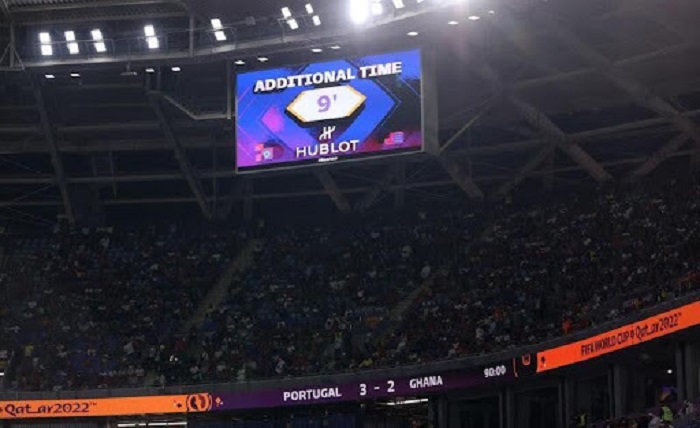
These two concepts are often confused, but they are completely different. Stoppage time is the additional time added by the referee at the end of each half to compensate for minutes lost due to substitutions, injuries, time-wasting, VAR, or other interruptions.
Extra time, meanwhile, is an additional period of play lasting a maximum of 30 minutes and is only applied when the competition format requires a winner to be determined.
Therefore, if a match is level after 90 minutes, it does not always go into extra time. This depends entirely on the competition format.
Fans following kết quả bóng đá need to understand this distinction to avoid misunderstanding when the match actually ends.
Conclusion
Based on the information above, What is extra time in football? can be understood as an additional period of play consisting of two halves, each lasting a maximum of 15 minutes, applied in matches where a winner must be determined according to the competition regulations. If the two teams remain level after 120 minutes, a penalty shootout may be used to determine the winner.
In the era of online football, fans can easily keep up with matches that extend into extra time through 90Phut and other football platforms. Following kenh truc tiep bong da also helps viewers avoid missing important developments during the final 30 minutes of the match.