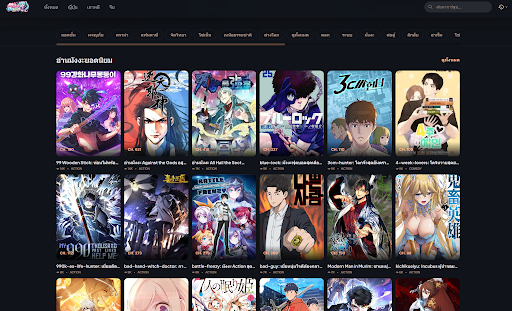
You open a chapter on your phone, thumb already hovering near the next page button, and the Thai comments under it are half the fun. Someone notices a tiny joke in the background. Someone else argues about a character’s expression. The page itself matters, sure, but the little crowd around it makes the reading feel warmer, sort of more alive than reading alone.
Thai manga reading feels more social than people admit
A lot of people talk about manga reading like it happens in private, quietly, with one reader and one screen. That misses the mood a bit. Thai readers often bring conversation into the reading itself, even when nobody planned it.
The comment section has its own rhythm
Scroll below a chapter and you’ll notice the tone right away. Some readers react in short bursts. Others write mini theories that sound like they have been carrying the same character in their head for three weeks.
Honestly, I like that part almost as much as the chapter sometimes.
You can see why a site connected with miku doujin fits into that habit, because readers are not just looking for pages. They are looking for a familiar corner where the style, tags, and updates make sense without too much explanation.
Translation choices shape the mood
A tiny Thai phrase can change how a scene lands. A casual “เอ๊ะ” feels different from a stiff translation, and sound effects like “ปัง” or “ฟึ่บ” carry more personality than people give them credit for.
But translation is not exactly invisible.
Sometimes you notice it because it works too well. The joke lands before you even think about the original phrasing, and weirdly enough that may be the clearest sign someone handled it with care.
Doujin culture is not as simple as outsiders make it
People outside the scene often flatten everything into one lazy explanation. Fan-made work, indie taste, familiar characters, niche art styles — they all get pushed into the same box, which feels a little unfair.
Readers follow taste, not just titles
A reader may start with a known character, then end up following a drawing style, a panel rhythm, or a creator’s way of handling quiet scenes. That shift happens slowly. At some point, you realise you are not searching by title first anymore.
You are chasing a feeling.
That is why the Thai word โดจิน carries more than a simple category label for many readers. It points to a reading habit where curiosity matters, and where smaller creative choices can pull you in faster than a big name.
Tags help, but they never explain everything
Tags are useful. Nobody wants to open the wrong kind of story after midnight with one eye half closed.
Still, tags can only do so much. A story marked with the same few labels may feel playful, soft, chaotic, or strangely calm depending on the artist. To be fair, that uncertainty is part of the appeal.
Where the culture seems to be heading
Thai manga reading culture will probably keep mixing private reading with public reaction. That combination feels too natural now to fade completely. Readers like the page, but they also like the noise around the page, the small jokes, the shared impatience.
Creators and translators may keep shaping that experience in quieter ways. A better tag, a smoother phrase, a cleaner upload schedule — none of it sounds huge on its own. Together, though, those details change whether readers return.
I also think readers are becoming pickier, but not in a harsh way. They know what feels comfortable to read. They notice tone. They notice when a story respects their time.
Maybe that is the part people miss. The culture is not only about what gets published next. It is also about how readers settle into it, argue gently with it, and keep coming back for reasons they may not fully explain.